

What is striking about the fashion of the 1990s is how lovable it is. It had style but was not always planned out. For example, one day you would wear a satin slip dress and the next, a flannel shirt with faded jeans.
And that is probably the thing I like best about the fashion of the 90s that women wore. It was contradictory. Your clothes could be sophisticated or messy, feminine or masculine, minimalist or fun. Also, you did not need a whole set of designer clothes all the time. Sometimes it could be enough just to wear a white vest, straight-leg jeans, and the appropriate shoes.
Although many styles from the era can be found today, it still has an element that is hard to emulate. The most successful ones looked very personal.
A Decade Without One Uniform
Trying to describe 1990s women’s fashion with one word does not really work. Grunge, minimalism, sportswear, preppy dressing and glamorous red-carpet fashion were all happening at roughly the same time.
Early in the decade, casual dressing became increasingly important. Women wore leggings, loose jumpers, denim, trainers and practical separates. Grunge made deliberately worn-in clothing fashionable, while designers such as Calvin Klein, Jil Sander, Prada and Helmut Lang pushed a cleaner and more restrained look.
Then celebrity culture added another layer. Television, music videos, supermodels and magazines carried styles into ordinary wardrobes much faster. You could see Rachel Green wearing a fitted waistcoat on Friends and suddenly understand how a piece normally associated with tailoring could work casually.
That mixture is why I think the 90s still feels more wearable than many previous decades. There was room to choose your own version of it.
The Slip Dress
If I had to pick one item that instantly says “1990s”, the slip dress would be near the top of the list.
Its appeal came from simplicity. Thin spaghetti straps, soft fabric and a shape that skimmed the body created an outfit that looked elegant without requiring much decoration. Claudia Schiffer, Kate Moss and other models helped make the silhouette one of the period’s most recognisable looks.
What makes the slip dress interesting is how differently women wore it. On the red carpet, it could look glamorous and sensual. In more alternative circles, it might be worn with messy hair, a cardigan or heavy boots.
Personally, I like the second approach because it stops the dress from feeling too formal. Even today, I would rather wear a simple black slip dress with an oversized blazer or flat shoes than style it with too many accessories.
That contrast between delicate fabric and casual styling was very 90s.
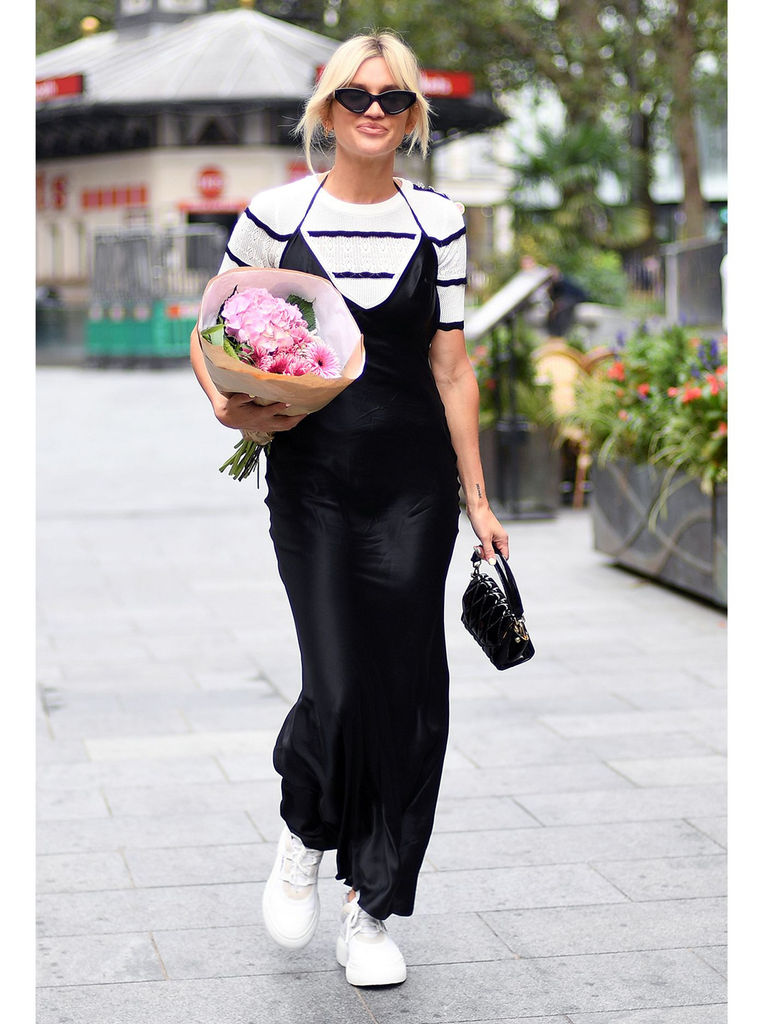
Image – Source
Grunge Was More Than Flannel
People often reduce grunge fashion to checked shirts, but the look had much more character than that.
Its roots were connected to the alternative music culture of the early 1990s, especially around Seattle. Nirvana, Pearl Jam and Soundgarden helped popularise an anti-glamour attitude where clothing could appear practical, second-hand and slightly worn.
For women, that could mean oversized plaid shirts, loose denim, floral dresses, old cardigans, band T-shirts and combat boots. The point was not to look perfectly coordinated.
And that is the part I think gets missed when people recreate grunge today. A brand-new checked shirt, perfectly distressed jeans and carefully styled boots can technically contain all the right pieces but still miss the original attitude.
Grunge worked because it looked a little accidental.
Denim Did the Heavy Lifting
The 90s would not have looked the same without denim.
Light-wash jeans, relaxed cuts, high-waisted mom jeans, denim jackets, skirts and overalls became everyday staples. Cindy Crawford’s casual denim looks remain a good example of how jeans could feel effortless without appearing careless.
The fit also mattered. Modern skinny jeans were not the default. Many 90s silhouettes gave the leg more room, creating a relaxed shape that worked especially well with fitted tops.
Double denim also had its moment. Tyra Banks wore light-wash denim with a choker and cowboy-inspired boots, proving that matching denim pieces could create an intentional outfit rather than a fashion mistake.
I know double denim divides people, but I actually think the 90s got it right. The trick is keeping the washes reasonably close and letting the rest of the outfit stay simple.
Tiny Tops, Bigger Jeans
One of the strongest styling formulas of the decade was based on proportion.
Women frequently paired small fitted tops with looser bottoms. Crop tops, baby tees, boob tubes and simple vests worked with baggy jeans, low-rise trousers or long skirts.
That balance is worth noticing because it explains why many 90s outfits still look good in photographs. When the top half was fitted, the lower half could carry more volume without overwhelming the body.
Britney Spears became closely associated with cropped tops and low-rise clothing towards the end of the decade. Gwen Stefani took the same basic idea in a more alternative direction, combining cropped tops with maxi skirts, platforms and distinctive hairstyles.
If I were building a 90s-inspired outfit today, this is probably where I would start: one fitted top, relaxed denim and a strong shoe. It is simple, but the proportions do most of the styling work.
Clueless Changed the Mood
Then there was Clueless.
Released in 1995, the film gave 90s fashion one of its most memorable wardrobes. Cher Horowitz, played by Alicia Silverstone, wore coordinated sets, plaid skirts, knee-high socks, fitted cardigans and Mary Jane-style shoes.
The famous yellow checked outfit is still instantly recognisable.
What I find interesting is that the film did not simply copy everyday teenage fashion. Costume designer Mona May created a brighter, more polished fashion world that deliberately contrasted with the grunge clothes young people were also wearing at the time.
That is why Clueless still matters when we discuss the decade. It showed that 90s fashion was not travelling in one direction.
Some women wanted oversized flannel. Others wanted matching skirts and jackets. Plenty enjoyed both.
Sportswear Left the Gym
The 1990s also helped make sportswear part of normal daily dressing.
Women were already wearing leggings, sweatshirts, bike shorts, trainers, tracksuits and baseball caps, but the decade pushed these pieces further into street style.
Princess Diana remains one of the most referenced examples. Her off-duty combinations of oversized sweatshirts, cycling shorts, socks and trainers now look remarkably close to outfits worn today.
And that is one of those 90s moments I genuinely like because it was practical first. It did not require uncomfortable clothing or complicated layering.
Sportswear also became increasingly influenced by hip-hop and youth culture. Loose shapes, branded trainers, caps and athletic separates moved far beyond actual sport.
You could argue that much of modern athleisure owes something to this period.
Platforms Had Personality
Some trends were subtle. Platform shoes were not.
The Spice Girls turned them into one of the loudest visual signatures of late-90s pop culture. Boots, Mary Janes and chunky trainers all appeared with exaggerated soles.
They worked particularly well with mini dresses, short skirts and fitted tops because they gave otherwise simple outfits a playful edge.
Would I wear the most extreme Spice Girls platforms now? Probably not.
But a slightly raised loafer, platform trainer or chunky sandal still makes sense. That is a good example of how 90s style can be borrowed rather than copied literally.
Accessories Made the Outfit
One of the easiest mistakes when discussing fashion history is focusing only on clothes. In the 90s, accessories often completed the whole look.
Think about chokers, scrunchies, hoop earrings, chain belts, tiny sunglasses, bucket hats and small shoulder bags.
A plain vest and jeans could immediately look more 90s once you added a black choker and compact bag.
Destiny’s Child frequently wore chain belts and coordinated looks, while chokers appeared everywhere from grunge outfits to red-carpet styling.
I particularly like how small many of these accessories were. You did not always need a statement necklace or oversized handbag. Sometimes the details were deliberately neat and close to the body.
That restraint suited the decade’s minimalist side beautifully.
Minimalism Looked Expensive
The minimalist side of 90s fashion women wore deserves more attention because it was not simply “basic clothing”.
The strongest minimalist outfits relied heavily on cut, proportion, fabric and fit.
A black column dress could look striking because nothing distracted from its shape. A white shirt with tailored trousers could feel sophisticated because the silhouette was clean. Neutral shades also allowed texture to become more noticeable.
Designers including Calvin Klein and Jil Sander helped establish this stripped-back mood.
The result was clothing that often looked quieter than 1980s fashion but not necessarily less luxurious.
I think this is one reason the decade photographs so well today. When an outfit is built around shape instead of excessive decoration, it dates more slowly.
The Little Black Dress
The 90s also gave us some unforgettable black dresses.
One of the most famous was Princess Diana’s Christina Stambolian dress, worn to a Serpentine Gallery event in 1994. Its off-the-shoulder neckline, fitted shape and short hem created an image that is still regularly referenced in fashion coverage.
The dress became known as the “revenge dress”, but even without the story surrounding it, the design captures something important about 90s eveningwear.
It was striking without being complicated.
There were no excessive layers or elaborate embellishments. The silhouette did the work.
That confidence is something worth borrowing today. Sometimes an outfit becomes memorable because it knows when to stop.
Sheer Dressing Was Already Here
Sheer clothing might feel like a recent red-carpet obsession, but the 1990s had plenty of it.
Kate Moss’s transparent silver dress remains one of the era’s most famous examples. Lingerie-inspired fabrics, lace panels, satin and semi-transparent materials also appeared in eveningwear throughout the decade.
Iman, for example, wore looks that blurred the boundary between underwear and outerwear.
What is interesting is how naturally this fitted with 90s minimalism. The dresses could be revealing, but their shapes were often simple.
Instead of heavy beading, enormous skirts or complex construction, designers frequently relied on fabric and silhouette.
The effect could be daring without feeling visually crowded.
Hair Was Part of the Fashion
You cannot really separate 90s clothing from 90s hair.
Scrunchies, butterfly clips, crimped sections, face-framing strands, pigtails and space buns were part of everyday styling. Jennifer Aniston’s layered “Rachel” haircut became one of the most copied celebrity hairstyles of the decade.
Beauty followed similar trends. Brown lipstick, nude tones, glossy lips, narrow eyebrows and frosted finishes all had moments.
The interesting part is that hair and make-up often helped identify which version of 90s style someone was wearing.
A slip dress with sleek hair could feel minimalist. The same dress with darker lipstick, messy hair and boots could move towards grunge.
That flexibility made basic clothes surprisingly expressive.
The Forgotten Power of Proportion
Here is one thing I think modern recreations often overlook: the 90s was very good at proportion.
Oversized leather jackets were worn with tiny tops. Loose jeans were balanced with fitted tees. Short skirts were paired with long coats. Simple dresses were styled with chunky shoes.
That contrast stopped outfits from feeling flat.
If you want to wear 90s fashion now, I would pay more attention to proportion than to hunting down exact vintage pieces.
Try an oversized blazer with a fitted vest.
Wear loose denim with a cropped cardigan.
Pair a simple mini dress with heavier shoes.
Those combinations capture the decade’s spirit far better than wearing five obvious retro trends at once.
Early and Late 90s Felt Different
The 1990s changed significantly from beginning to end.
Early in the decade, you could still see traces of the late 1980s, particularly in sportswear, denim and certain oversized silhouettes. Grunge soon brought darker colours, thrift-store styling and practical layering into the mainstream.
The middle years became more polished. Minimal tailoring, slip dresses, fitted tops and cleaner silhouettes grew stronger.
By the late 1990s, pop culture was becoming more playful and glossy. Platforms grew higher, trousers moved lower on the waist, tiny tops became more common, and metallic or futuristic details hinted at the Y2K fashion that would soon follow.
So when someone says “90s outfit”, I always want to know: which part of the 90s?
The difference between 1992 and 1999 can be surprisingly large.
How I Would Wear It Now
I would not recreate a complete 1990s outfit from head to toe.
Instead, I would choose one recognisable element and build around it.
For daytime, I like the idea of straight or relaxed jeans with a fitted white vest, small shoulder bag and simple trainers.
For evening, a black slip dress with a slightly oversized blazer feels much more wearable than a fully themed retro outfit.
A plaid skirt can work with a plain jumper rather than knee-high socks and a matching jacket. A flannel shirt looks better to me when it feels genuinely relaxed rather than deliberately “grunge”.
The goal should be to borrow the mood, not dress for a costume party.
What the 90s Got Right
Looking back, the decade understood something that modern wardrobes are rediscovering: good basics can carry a lot of personality.
A pair of jeans did not have to be unusual if the fit was right. A dress could be almost completely plain and still become memorable. Accessories could be small but distinctive.
There was also less pressure for every part of an outfit to match perfectly.
That slight imperfection gave the decade charm.
I think this is why 90s style keeps returning. It gives people recognisable fashion references without demanding a completely new wardrobe.
Why We Still Wear It
The strongest 90s fashion women loved has survived because so much of it was built around pieces we still use: jeans, vests, simple dresses, blazers, trainers, mini skirts and shoulder bags.
The styling changes, but the foundation stays useful.
That makes the decade unusually easy to reinterpret. You can lean into grunge, minimalism, pop fashion, sportswear or preppy style without losing the connection.
And perhaps that is the biggest lesson from the 1990s. Fashion did not have to look perfect to look memorable.
Sometimes the best outfit was simply good denim, a small top, a strong shoe and the confidence to leave it there.
FAQs
What did women wear in the 90s?
Women in the 1990s wore a mix of mom jeans, slip dresses, crop tops, plaid shirts, mini skirts, oversized jackets and platform shoes. The decade was known for mixing grunge, minimalism, sportswear and polished evening looks.
What were the biggest 90s fashion trends for women?
Some of the biggest trends included light-wash denim, chokers, baby tees, spaghetti-strap dresses, combat boots, matching plaid sets and small shoulder bags. Many of these styles have returned in modern fashion.
Who influenced women’s fashion in the 1990s?
Figures such as Kate Moss, Naomi Campbell, Princess Diana, Jennifer Aniston, Gwen Stefani, Britney Spears and the Spice Girls helped shape different sides of 90s style through modelling, music, television and public appearances.
How can I wear 90s fashion today?
The easiest way is to use one or two 90s-inspired pieces rather than copying a complete outfit. I like combinations such as relaxed jeans with a fitted vest, a slip dress with an oversized blazer, or a plaid skirt with a simple jumper.
Why is 90s women’s fashion popular again?
90s fashion remains popular because many of its key pieces are comfortable, versatile and easy to style. Denim, simple tops, slip dresses, trainers and shoulder bags fit naturally into modern wardrobes while still giving an outfit a distinctive retro feel.